




NPL-Certified and CPCB-Compliant Gas Analyzers: Their Role in Industrial Emission Monitoring- Envirozon Instruments& Equipments Pvt. Ltd.
Introduction
Industrial processes that involve combustion, chemical reactions, heating, or material processing can generate gases that need to be continuously monitored. Accurate measurement of stack emissions is therefore an important part of environmental monitoring, process control, and regulatory compliance.
Gas analyzers used in Continuous Emission Monitoring Systems (CEMS) help industries measure important gaseous pollutants and process gases in real time. When an analyzer is supported by appropriate certification, calibration traceability, and applicable CPCB requirements, it can provide industries with greater confidence in the accuracy and reliability of their emission monitoring data.
Modern industrial gas analyzers are available with different sensing technologies depending on the gas being measured, concentration range, process conditions, and required measurement accuracy.
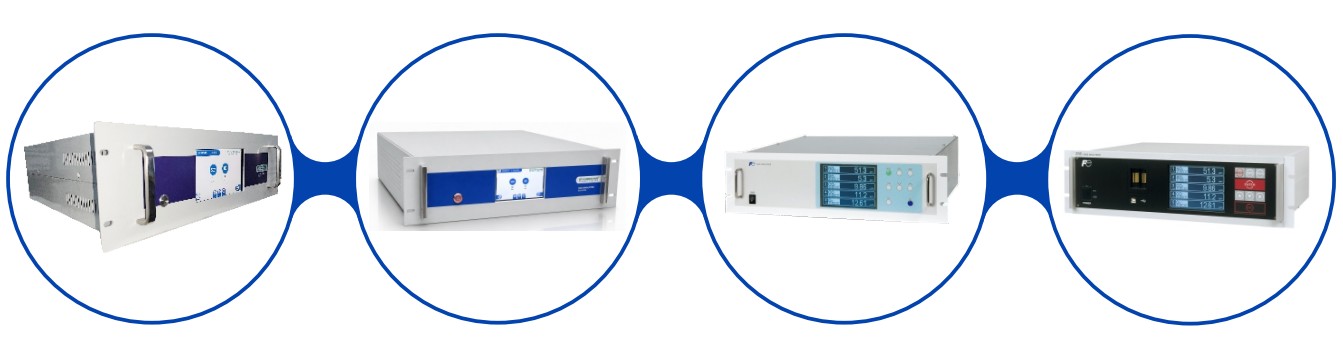
According to the supplied product brochure, the analyzer range includes NDIR, UV-DOAS, Zirconia, and TDLAS-based technologies for applications involving multiple industrial gases.
What Is an Industrial Gas Analyzer?
An industrial gas analyzer is an analytical instrument designed to determine the concentration of specific gases in a process or emission stream.
In stack emission monitoring, the analyzer receives a representative sample from the chimney or process exhaust and measures gases such as:
SO₂
NOx
CO
CO₂
O₂
Cl₂
NH₃
CH₄
H₂S
HCl
HF
H₂O
The exact gases measured depend on the analyzer model and sensing technology.
The supplied brochure specifies NDIR analyzers for gases such as CO, CO₂, SO₂ and NO, UV-DOAS analyzers for gases including SO₂, NO, NO₂, NH₃, O₃ and Cl₂, and Zirconia analyzers for oxygen measurement.
Why NPL Certification and CPCB Compliance Matter
For industries, emission monitoring data is not simply a number displayed on an instrument. The data may be used for environmental monitoring, regulatory reporting, process evaluation, and corrective action.
This makes measurement reliability extremely important.
Where applicable, NPL-related calibration traceability can provide confidence that measurements are linked to recognized reference standards. Similarly, CPCB requirements and applicable technical specifications are important when gas monitoring equipment is deployed for regulatory emission monitoring.
Industries should therefore evaluate not only the analyzer itself but the complete monitoring system, including:
Measurement technology
Calibration procedure
Sampling system
Gas conditioning
Analyzer accuracy
Zero and span stability
Data communication
Data logging
CEMS integration
Maintenance and validation procedures
A certification or compliance claim should always be supported by the relevant certificate, approval, test report, or applicable regulatory documentation for the specific analyzer model and application.
Role of Gas Analyzers in CEMS
Continuous Emission Monitoring Systems are designed to provide continuous information about emissions from industrial stacks.
A typical CEMS arrangement includes a sampling probe, sample line, gas conditioning system, filters, moisture removal, calibration gas arrangement, analyzer, and communication system.
The CEMS pneumatic diagram in the supplied brochure illustrates a sampling arrangement incorporating a heated sample line, gas cooler, moisture sensor and filter, NOx converter, calibration gas cylinders, aspirator/pump, and gas analyzer.
This demonstrates an important point: accurate gas measurement depends on the complete sampling and conditioning system, not only on the analyzer.
Sample Handling and Conditioning
Industrial stack gases can contain high temperatures, moisture, dust, and other interfering components. If the sample is not properly handled before it reaches the analyzer, measurement accuracy can be affected.
The brochure describes two sample-handling approaches.
Hot & Wet Extraction
In a hot and wet extraction system, the sample is extracted from the stack using a heated sample probe and transferred through a heated line to prevent condensation. The sample is subsequently cooled and moisture is removed before analysis.
Cold & Dry Extraction
In a cold and dry extraction system, the sample is cooled and moisture is removed near the sampling point. The conditioned sample is then transported to the analyzer through a PTFE line.
Selecting the appropriate sampling and conditioning arrangement is important because different industrial processes have different gas temperatures, moisture levels, dust loading, and chemical compositions.
Major Gas Analyzer Technologies
1. NDIR Gas Analyzer
NDIR, or Non-Dispersive Infrared technology, is commonly used for measuring gases that absorb infrared radiation.
According to the supplied brochure, the NDIR analyzer range can be used for gases including CO, CO₂, SO₂ and NO, depending on the model.
NDIR technology can be useful in industrial applications where stable and continuous measurement of selected infrared-active gases is required.
2. UV-DOAS Gas Analyzer
UV-DOAS, or Ultraviolet Differential Optical Absorption Spectroscopy, uses ultraviolet absorption characteristics to identify and quantify selected gases.
The brochure lists SO₂, NO, NO₂, NH₃, O₃ and Cl₂ among the gases that can be measured using UV-DOAS technology.
This technology can be particularly useful where selective measurement of multiple gas components is required.
3. Zirconia Oxygen Analyzer
Zirconia-based analyzers are used for oxygen measurement.
Oxygen measurement is important in combustion-related processes because oxygen concentration can provide valuable information about combustion conditions and excess air.
The supplied brochure specifically identifies Zirconia technology for O₂ measurement.
4. TDLAS Laser Gas Analyzer
TDLAS stands for Tunable Diode Laser Absorption Spectroscopy.
The brochure describes the EZ320 TDLAS Laser Gas Analyzer as an extractive gas monitoring system designed for real-time measurement of critical industrial gases. It lists HCl, HF, NH₃, CH₄, O₂, H₂S, CO₂ and H₂O among the measurable gases.
The brochure highlights the system's selective measurement, fast response, and resistance to interference, making TDLAS technology suitable for demanding industrial process environments.
Important Technical Features
The gas analyzer specifications shown in the brochure include:
Extractive measurement type
Measuring range up to approximately 0–1000 ppm for the general gas analyzer range, with other ranges available on request
Accuracy of ±2% of reference measurement
Repeatability of ≤ ±1% of full scale
Response time (T90) of ≤60 seconds
Zero drift of ≤ ±1% F.S. per week
Span drift of ≤ ±1% F.S. per week
Manual, automatic, or remote calibration depending on model
Approximately 0.8 LPM sample flow rate
7-inch colour touchscreen HMI depending on model
4–20 mA analog outputs
RS485 communication with Modbus RTU
Potential-free alarm relay contacts
19-inch rack mounting
220 VAC ±10%, 50 Hz power supply
These specifications are taken from the technical specification table in the supplied brochure.
The TDLAS model shown on the third page has a specified measuring range of approximately 0–50 ppm, with other ranges available on request, and includes similar communication, calibration, display, and rack-mounting features.
Role Across Different Industries
Gas analyzers can play an important role in industries where combustion gases, process emissions, or chemical gases need to be monitored.
Power and Boiler Plants
Boilers and combustion systems generate gases such as SO₂, NOx, CO and CO₂. Continuous monitoring can help operators understand emission conditions and identify changes in combustion performance.
O₂ measurement can also be useful for evaluating combustion conditions and excess-air levels.
Cement and Mineral Industries
Cement and mineral-processing operations involve high-temperature processes and significant exhaust gas streams. Gas analyzers can support continuous emission monitoring and help operators track relevant gaseous parameters.
Chemical and Process Industries
Chemical plants may handle gases such as HCl, HF, NH₃, Cl₂, H₂S and other process gases.
For these applications, selecting the correct measurement technology is particularly important because gas composition and concentration can vary considerably from one process to another.
Waste and Incineration Applications
Thermal treatment and incineration processes can generate multiple gaseous pollutants. Continuous gas analysis can help industries monitor their emission profile and identify abnormal operating conditions.
Steel and Metallurgical Industries
High-temperature industrial processes can generate CO, CO₂, SO₂, NOx and other gases. Gas analyzers can provide continuous information for both environmental monitoring and process optimization.
Gas Analyzers for Environmental Compliance
One of the most important roles of a gas analyzer is to provide reliable measurement data for environmental monitoring.
A properly configured monitoring system can continuously measure selected emission parameters and transmit the data to a plant monitoring or data acquisition system.
The supplied brochure identifies the analyzers as being designed for continuous emission monitoring, process control, and environmental compliance across industrial applications.
For industries subject to regulatory monitoring requirements, the complete CEMS installation should therefore be designed according to the applicable regulatory requirements and project specifications.
Data Communication and Remote Monitoring
Modern gas analyzers are increasingly integrated with plant automation and environmental data systems.
The supplied analyzer specifications include:
4–20 mA analog output for industrial signal integration and RS485 Modbus RTU communication for digital communication.
Remote calibration is also identified as an available feature depending on the model.
These features can make the analyzer easier to integrate with CEMS panels, PLC/SCADA systems, data acquisition systems, and other industrial monitoring infrastructure.
Why the Complete CEMS System Matters
Choosing a gas analyzer based only on the name of its sensing technology is not enough.
For reliable industrial emission monitoring, attention should also be given to:
Sampling probe design
Heated or unheated sample lines
Gas cooling
Moisture removal
Filtration
NOx conversion where required
Calibration gas arrangement
Sample flow control
Analyzer calibration
Data communication
Preventive maintenance
Validation and performance checks
The CEMS arrangement illustrated in the supplied brochure demonstrates how several of these components work together before the sample reaches the analyzer.
Benefits for Industrial Operations
A properly selected and maintained gas analyzer can provide several operational benefits:
Continuous visibility of emission parameters
Better understanding of combustion conditions
Faster identification of abnormal emission levels
Support for environmental compliance
Improved process monitoring
Integration with plant automation systems
Remote monitoring and calibration capabilities on supported models
Reliable long-term measurement when properly maintained
How Industries Should Select a Gas Analyzer
Before purchasing or installing a gas analyzer, industries should consider the following questions:
Which gases need to be measured?
The analyzer technology should be selected according to the required gases.
What is the expected concentration range?
The measurement range should match the actual process and regulatory monitoring requirements.
What are the stack conditions?
Temperature, moisture, dust, pressure, and corrosive components can influence the sampling system design.
Is extractive or another measurement arrangement appropriate?
The sampling architecture should be selected according to the process conditions and analyzer technology.
What certification and compliance documentation is required?
Where regulatory monitoring is involved, industries should verify the applicable CPCB requirements and obtain the relevant certification, calibration, approval, and technical documentation for the specific equipment.
How will the analyzer communicate with the monitoring system?
4–20 mA and RS485/Modbus interfaces can facilitate integration with industrial control and data acquisition systems, depending on the project configuration.
Conclusion
Gas analyzers are a critical component of modern industrial emission monitoring systems. Their role extends beyond simply measuring gases: they provide continuous information that can support environmental monitoring, process control, operational decision-making, and regulatory compliance.
Technologies such as NDIR, UV-DOAS, Zirconia, and TDLAS provide different approaches for measuring gases under different industrial conditions. The supplied product range demonstrates how these technologies can be combined with sample handling, gas conditioning, calibration, communication, and CEMS infrastructure to create a complete monitoring solution.
For industries looking for reliable emission monitoring, the right approach is to evaluate the complete gas analysis and CEMS solution—including analyzer technology, sampling and conditioning, calibration, communication, maintenance, and applicable certification or regulatory requirements.
A properly selected and properly maintained gas analyzer can help industries move toward more accurate, continuous, and dependable emission monitoring while supporting their broader environmental management objectives.